 UK
UK



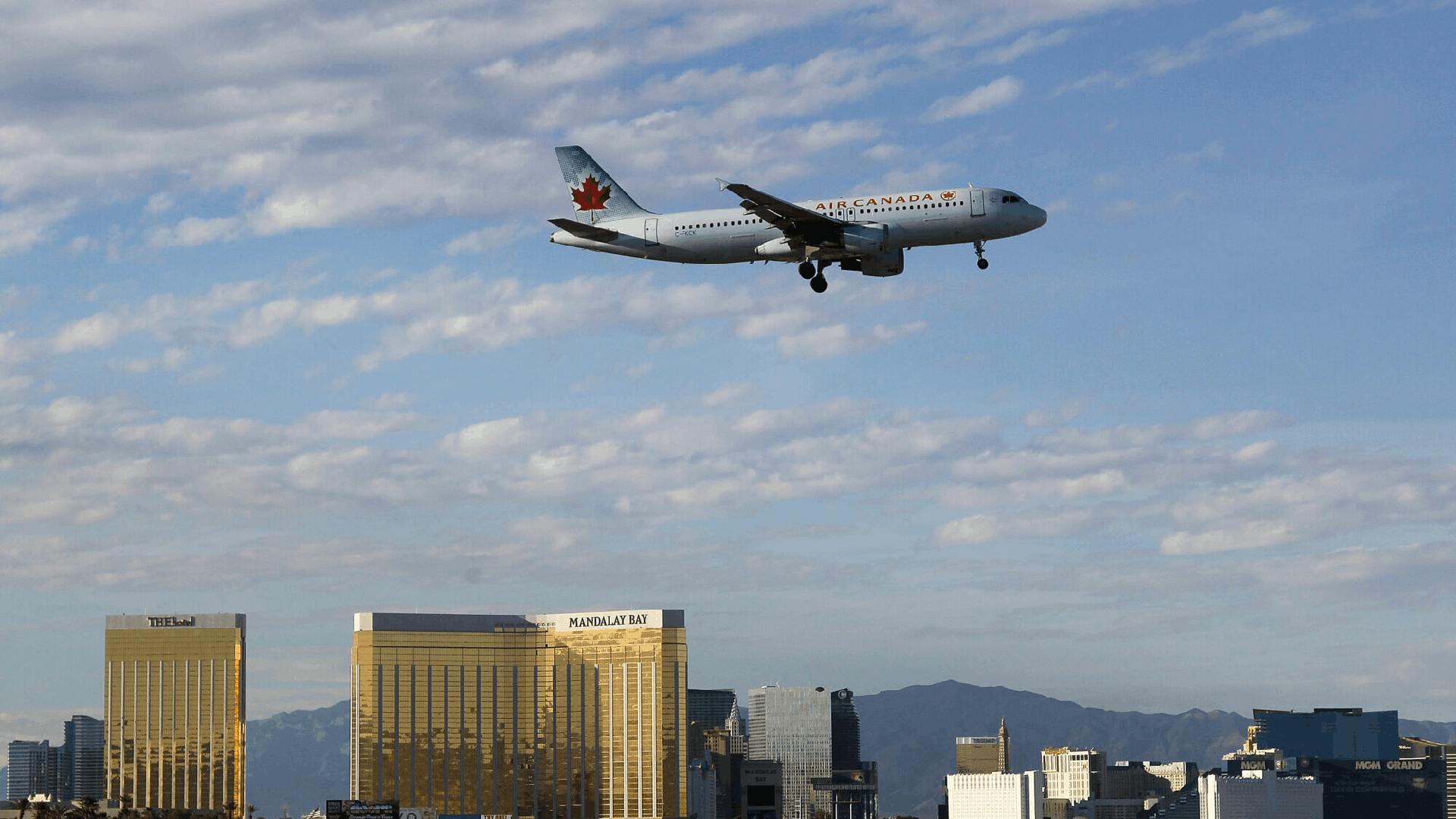
An intriguing offer by the downtown Las Vegas hotels Circa Resort & Casino, the D Las Vegas, and Golden Gate Hotel & Casino made headlines last week. It addressed the currency rate issues that Canadian tourists have when visiting the United States, as US$100 as of Tuesday morning is about CA$136.
Through August 31, those establishments will offer a "At Par" pledge in a number of gaming, lodging, and beverage options. Regardless of daily currency rates, eligible Canadian guests earn US$1 for every CA$1 spent. For instance, in slot promotional play, Canadians can redeem up to CA$500, which is valued at full US dollars.
At check-in, Canadians staying at Golden Gate, the D, or Circa will be given par prices. A number of beverage establishments are also included in the offer, such as Bar Prohibition! at Golden Gate, Overhang at Circa, and BarCanada at the D Las Vegas.
Are Canadians Going to Care?
Will Canadians care, though? As everyone is aware, particularly those who run hotels and casinos in Las Vegas, the number of Canadians visiting Sin City has drastically dropped in the last 12 months. Is exchange rates the main factor?
"These hotels are trying to address the problem with transactional tactics when, effectively, it is not fundamentally a transactional problem,” said Christopher Whyte, a travel agent with Freestone Travel, outside Toronto. “Costs are only a small part of the problem.”
Given the political and economic difficulties that have existed between the two countries for the past year, Canada is actively boycotting travel to the United States and American-made products.
Following Canada's announcement last week of a new trade agreement with China that would allow thousands of EVs manufactured in China to be imported into the country's market, US President Donald Trump threatened this week to impose 100% tariffs on Canadian exports. Speaking at the World Economic Forum in Davos last week, Canadian Prime Minister Mark Carney indirectly attacked the United States by using terms like "ruptured" to characterize the old-world trade order and stating that middle powers must begin claiming their own economic independence from the global superpowers.
Trump's Effect
Over the past year, Trump's tariff strategy, language, and tone have alarmed many Canadians. He claimed that Canadians are alive because of the United States last week, downplaying the sacrifices and contributions made by Canadians during the Afghan War, in which Canada lost 159 soldiers. The effects of everything have compounded.
Statistics Canada reports that 7.6 million fewer Canadians traveled to the US by land in 2025, a 30% decrease from 2024, and that return visits to the US decreased by an average of 23.6% in November compared to November 2024.
An Abacus survey revealed that a sizable minority of Canadians (33%) would have a negative opinion of close friends or family members who visited Harry Reid International Airport in Las Vegas, as we reported last week. The venue recently released October airport traffic data for Las Vegas, which revealed a 33.2% year-over-year decline in Canadians arriving via WestJet, as well as a 26.3% decline via Air Canada, a 22% decline via Porter Airlines, and a 71.4% decline via Flair.
When Derek Stevens, the owner and CEO of the three hotel locations, talks about how he grew up in Detroit, which is just across the border from Canada, and how he has family and friends in Canada, you have to give him credit. Stevens said that Canadians were given at-par money promotions when they drove across the border to visit casinos in the Detroit region. Having worked in the industry in Las Vegas for thirty years, he has never seen anything like it.
Las Vegas Gambling: Canadian Boycott
“I just felt things have gotten a little too touchy … with what has transpired economically and a bit politically … it was a good time to come out and say, hey Canada, we miss you,” Stevens told CBC News. “We thought doing the ‘At Par’ was a way of showing that we meant it. (The drop in Canadians coming to Las Vegas) been a combination of exchange rate, and we have this boycott. I understand the background behind it and completely get the feeling of bitterness. I understand it if you are not prepared (to come back). But we want you here, and we want to be up front about it. Canada and the US are better together. Although our countries are in a spat, I don’t think all our people are.”
Christopher Whyte, meanwhile, brought up an intriguing statistic: thousands of travel advisers attend the annual conference of his company's biggest industry partner, a significant North American travel consortium, which is held in Las Vegas. He normally attends each year, and between 20 and 30 colleagues from their larger agency typically do the same. Five people from his agency have registered to go this year. Why would a travel agency spend money and go if there is little interest among travelers?
Transactional Tactics Won’t Address Fundamental Issues
“From where I sit, Canadians have reduced travel to the US primarily for two main reasons,” Whyte said. “One, political concerns that continue to denigrate and threaten the sovereignty of the US’s largest trading partner and traditionally closest ally and two, personal security concerns. ICE activities are getting a lot of coverage up here, and there is continued noise about issues crossing the border (for those who do). Canada is a very pluralistic and multicultural society, and many Canadians believe (rightly or wrongly) that their freedom and personal security might be at risk if they cross the border.
"Personally, I don’t believe these fundamental issues can be addressed by transactional tactics like incentives and discounts,” said Whyte.
When asked about their travel plans for 2026, 62% of more than 1,000 adult Canadians in a Flight Centre research stated they were less likely to visit the US than in prior years. In November, the investigation was carried out.
Thus far, Flight Center has had no effect on reservations
According to Amra Durakovic, a representative for Flight Centre in Toronto, the campaign hasn't resulted in any "meaningful lift" in Las Vegas reservations thus far. Although some consumers are aware of it and have brought it up, this hasn't resulted in a rise in demand.
“Part of that is practical,” she said. “The hotels participating are on Fremont Street, while most Canadian travellers still prefer staying on the Strip. What we’re seeing is that US travel decisions are being shaped less by short-term price incentives and more by sentiment — including comfort levels, perceived welcome and the broader political climate. Right now, those factors appear to outweigh individual promotions for many Canadian travellers.”